PCI (Prayer–Computer Interaction)
PCI (Prayer–Computer Interaction) is an artwork series that explores how contemporary humans form spiritual, emotional, and ethical relationships with machines—not as tools, but as silent counterparts in moments of vulnerability, hope, and reflection. Rather than framing technology as an instrument of efficiency or control, PCI places computation within the intimate space of prayer, where interaction is guided by presence rather than output. Prayer is understood not as a belief-bound religious act, but as a universal human gesture—an embodied way of facing uncertainty, seeking healing, and reflecting on one’s place in the world.
Using audio sensing and motion-capture systems, primarily through TouchDesigner and depth-based devices such as Kinect, PCI translates participants’ voices, posture, and movements into evolving visual environments. Any form of prayer or contemplative expression, regardless of religious or cultural background, can become input. By responding to rhythm, stillness, and flow rather than language or belief, PCI creates an interfaith, non-verbal space for self-reflection, personal healing, and exploration of life’s meaning—where technology acts as a quiet medium rather than an authority.
On top of these works, I plan to explore different sensor technologies, such as brainwave, heart rate, and facial tracking for a wider variety of techno-theological expression.
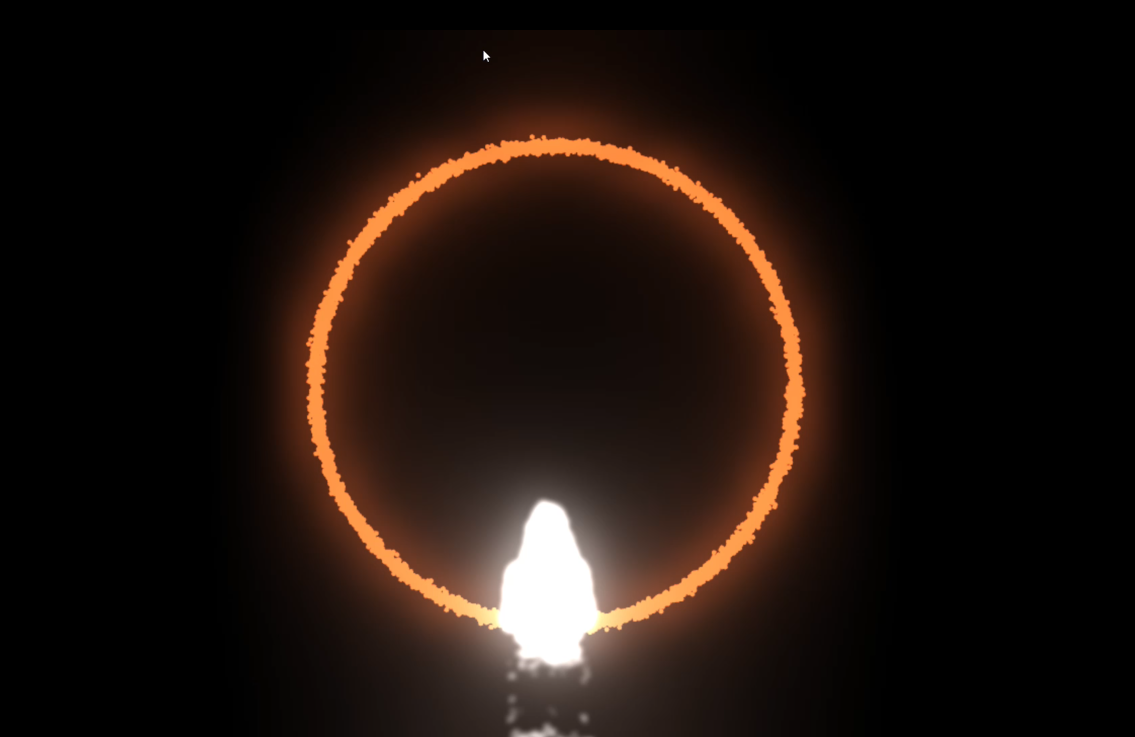
Moon Flame (月炎)
Moon Flame (月炎)
PCI#1: Moon Flame (月炎)
In any religion and beliefs, we all pray and worship for the moon as the symbol of beauty and tranquility. Also, in many cultures, fire symbolizes burning negativity and purification for rebirth.
This audio and motion-reactive artwork is built for any prayers for inner tranquility and for help in visualizing karma and energy purification. These videos are tested with Heart Sutra (般若心経).
Tool : Touch Designer, Kinect
Thousand Hands and Eyes (千手千眼)
Thousand Hands and Eyes (千手千眼)
PCI#2: Thousand Hands and Eyes (千手千眼)
In Buddhism, Thousand Hands and Eyes refers to Avalokiteśvara (Kannon), the bodhisattva of compassion. The many hands symbolize the ability to relieve suffering in countless ways, while the eyes within them represent wisdom—the clarity to see suffering and respond appropriately. Compassion and wisdom are inseparable, each guiding the other.
Inspired by this concept, the artwork becomes an interactive field where the observer’s hands and body movements are multiplied across a grid, forming “thousand hands” in constant transformation. As participants move or become still, the hands appear and dissolve, revealing eyes of wisdom that emerge and fade. Through this embodied interaction, viewers are invited to reflect on truth, deity-like self-efficacy, and the connectivity between consciousness and subconsciousness.
Tool: Touch Designer, Kinect
Music: Innocence by Kenji Kawai